Filters
Question type

Study Flashcards

Which of the following statements correctly characterizes the following compound? Which of the following statements correctly characterizes the following compound?   A) contains 6 p electrons and is aromatic B) contains 6 p electrons and is nonaromatic C) contains 8 p electrons and is antiaromatic D) contains 8 p electrons and is aromatic E) contains 8 p electrons and is nonaromatic


A) contains 6 p electrons and is aromatic
B) contains 6 p electrons and is nonaromatic
C) contains 8 p electrons and is antiaromatic
D) contains 8 p electrons and is aromatic
E) contains 8 p electrons and is nonaromatic

F) B) and D)
G) C) and D)

Correct Answer

verifed

verified

What is the major organic product obtained from the following reaction? What is the major organic product obtained from the following reaction?   A)    B)    C)    D)


A) What is the major organic product obtained from the following reaction?   A)    B)    C)    D)
B) What is the major organic product obtained from the following reaction?   A)    B)    C)    D)
C) What is the major organic product obtained from the following reaction?   A)    B)    C)    D)
D) What is the major organic product obtained from the following reaction?   A)    B)    C)    D)

E) All of the above
F) A) and B)

Correct Answer

verifed

verified

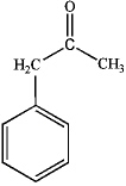
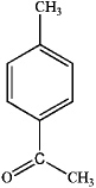
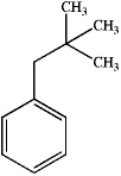
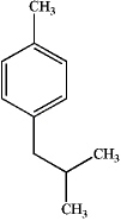
Circle the compound(s)in the following set that will undergo both substitution and addition when treated with Br2. Circle the compound(s)in the following set that will undergo both substitution and addition when treated with Br<sub>2</sub>.

Correct Answer

verifed

verified

Draw the structure of 4-bromo-2-fluorotoluene.

Correct Answer

verifed

verified

Place the following in order of reactivity towards electrophilic aromatic substitution. Place the following in order of reactivity towards electrophilic aromatic substitution.   A) I > II > III > IV B) I > II > IV > III C) II > I > III > IV D) II > I > IV > III E) III > IV > II > I


A) I > II > III > IV
B) I > II > IV > III
C) II > I > III > IV
D) II > I > IV > III
E) III > IV > II > I

F) A) and B)
G) All of the above

Correct Answer

verifed

verified

What is the major organic product obtained from the following reaction? What is the major organic product obtained from the following reaction?   A)    B)    C)    D)


A) What is the major organic product obtained from the following reaction?   A)    B)    C)    D)
B) What is the major organic product obtained from the following reaction?   A)    B)    C)    D)
C) What is the major organic product obtained from the following reaction?   A)    B)    C)    D)
D) What is the major organic product obtained from the following reaction?   A)    B)    C)    D)

E) A) and D)
F) A) and C)

Correct Answer

verifed

verified

A

What is the major organic product obtained from the following reaction? What is the major organic product obtained from the following reaction?   A)    B)    C)    D)


A) What is the major organic product obtained from the following reaction?   A)    B)    C)    D)
B) What is the major organic product obtained from the following reaction?   A)    B)    C)    D)
C) What is the major organic product obtained from the following reaction?   A)    B)    C)    D)
D) What is the major organic product obtained from the following reaction?   A)    B)    C)    D)

E) A) and B)
F) A) and C)

Correct Answer

verifed

verified

What is the major organic product obtained from the following reaction? What is the major organic product obtained from the following reaction?   A)    B)    C)    D)


A) What is the major organic product obtained from the following reaction?   A)    B)    C)    D)
B) What is the major organic product obtained from the following reaction?   A)    B)    C)    D)
C) What is the major organic product obtained from the following reaction?   A)    B)    C)    D)
D) What is the major organic product obtained from the following reaction?   A)    B)    C)    D)

E) None of the above
F) A) and D)

Correct Answer

verifed

verified

C

What is the electrophile in the reaction of benzene with acetyl chloride,CH3COCl,and AlCl3?


A) CH3CΒΊO+
B) CH3+
C) CH3CO2-
D) benzene

E) A) and B)
F) A) and C)

Correct Answer

verifed

verified

Instructions: Consider the reaction below to answer the following question(s) . Instructions: Consider the reaction below to answer the following question(s) .    -Refer to instructions.The Lewis acid catalyst in the reaction is indicated by letter _____. A) A B) B C) C D) D -Refer to instructions.The Lewis acid catalyst in the reaction is indicated by letter _____.


A) A
B) B
C) C
D) D

E) A) and C)
F) A) and B)

Correct Answer

verifed

verified

Draw the major product of the following reaction: Draw the major product of the following reaction:

Correct Answer

verifed

verified

Instructions: Consider the reaction below to answer the following question(s) . Instructions: Consider the reaction below to answer the following question(s) .    -Refer to instructions.The nucleophile in the reaction is indicated by letter _____. A) A B) B C) C D) D -Refer to instructions.The nucleophile in the reaction is indicated by letter _____.


A) A
B) B
C) C
D) D

E) A) and B)
F) None of the above

Correct Answer

verifed

verified

Consider the production of 1-bromo-4-nitrobenzene: Consider the production of 1-bromo-4-nitrobenzene:    a)  Explain why Pathway A for the production of 1-bromo-4-nitrobenzene produces a higher yield of the product. b) If reaction Pathway A is carried out at high temperatures, a trisubstituted product forms. Draw the structure of the product and explain why it forms. a) Explain why Pathway A for the production of 1-bromo-4-nitrobenzene produces a higher yield of the product. b) If reaction Pathway A is carried out at high temperatures, a trisubstituted product forms. Draw the structure of the product and explain why it forms.

Correct Answer

verifed

verified

a) Bromine is an o/p-director while the nitro group is a meta director. b) 11ec72bd_fd40_7d32_9c44_293de5af4b6f_TB34225555_11 Bromine is an o/p-director while the nitro group is a meta director. Both groups direct the second-NO2 to the same position-the position that is ortho to-Br and is also meta to-NO2.

An accurate description of the structure of benzene is:


A) The p bonds are quickly moving around the ring.
B) There are two distinct structures that are in equilibrium.
C) All the carbon-carbon bonds are equal in length.
D) There are distinct single and double bonds.
E) Some bonds are longer than others.

F) C) and D)
G) C) and E)

Correct Answer

verifed

verified

Predict the major product of each of the following reactions. Predict the major product of each of the following reactions.

Correct Answer

verifed

verified

Draw the resonance structures for acenaphthene. Draw the resonance structures for acenaphthene.

Correct Answer

verifed

verified

Which of the following is a correct statement regarding electrophilic aromatic substitution?


A) The carbocation intermediate will lose a proton to regain aromaticity,usually from a position other than the site of electrophilic attack.
B) Formation of the carbocation intermediate has a high activation barrier due to loss of aromaticity.
C) The carbocation intermediate has several resonance structures and is negatively charged.
D) Re-formation of the aromatic ring has a low activation barrier and therefore occurs slowly.
E) Many suitable electrophiles are unreactive and can be stored for long periods of time prior to use.

F) A) and B)
G) A) and C)

Correct Answer

verifed

verified

Which of the following statements is true about the structure of benzene?


A) six atomic 2p orbitals interact to form six p molecular orbitals
B) there are three bonding p molecular orbitals and three p antibonding molecular orbitals
C) the ground state electronic configuration of benzene has six electrons in three p bonding molecular orbitals
D) the carbon-carbon bonds are all the same length
E) All of these

F) B) and C)
G) A) and E)

Correct Answer

verifed

verified

Consider the following reaction: Consider the following reaction:   a) Predict the major product of the reaction. b)  If steps 2 and 3 were reversed, what effect would this have on the major product? a) Predict the major product of the reaction. b) If steps 2 and 3 were reversed, what effect would this have on the major product?

Correct Answer

verifed

verified

a) 11ec72c3_af70_1526_9c44_a92d0075060f_...

View Answer

Consider the following compound: Consider the following compound:    a) Provide the correct IUPAC name for the compound. b)  Draw and name the other isomeric nitrotoluenes. a) Provide the correct IUPAC name for the compound. b) Draw and name the other isomeric nitrotoluenes.

Correct Answer

verifed

verified

a) m-nitrotoluene or 1-methyl-3-nitroben...

View Answer

Showing 1 - 20 of 36

Related Exams

Show Answer