Filters
Question type

Study Flashcards

How many 1H NMR signals would trans-1,2-dichlorocyclopropane give?


A) 1
B) 2
C) 3
D) 4
E) 5

F) C) and E)
G) A) and E)

Correct Answer

verifed

verified

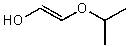
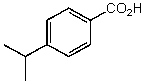
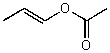
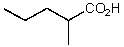
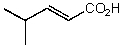
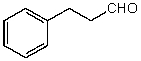
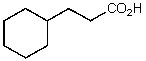
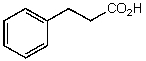
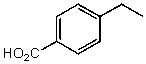
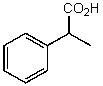
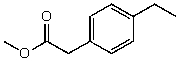
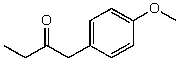
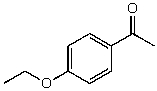
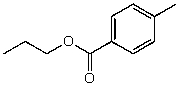
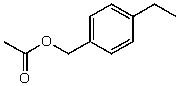
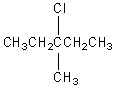
Which compound below would give rise to 3 signals in the proton NMR spectrum and 4 signals in the carbon NMR spectrum? (Assume you can separate and see all peaks.) Which compound below would give rise to 3 signals in the proton NMR spectrum and 4 signals in the carbon NMR spectrum? (Assume you can separate and see all peaks.)    A) I B) II C) III D) IV E) None of these choices.


A) I
B) II
C) III
D) IV
E) None of these choices.

F) All of the above
G) A) and C)

Correct Answer

verifed

verified

Which one of the following best represents the predicted approximate chemical shift and coupling for the hydrogen(s) indicated with the arrow? Which one of the following best represents the predicted approximate chemical shift and coupling for the hydrogen(s) indicated with the arrow?   A) 1.00 ppm,doublet B) 2.00 ppm,singlet C) 2.00 ppm,triplet D) 2.00 ppm,doublet E) 1.00 ppm,triplet


A) 1.00 ppm,doublet
B) 2.00 ppm,singlet
C) 2.00 ppm,triplet
D) 2.00 ppm,doublet
E) 1.00 ppm,triplet

F) A) and B)
G) A) and C)

Correct Answer

verifed

verified

What is the structure of the compound in the following 1H-NMR spectrum with the molecular formula C6H10O2? The 13C-NMR shows characteristic chemical shifts at 22.3,31.1,117.3,157.7,and 171.6 ppm.Relative integration is shown. What is the structure of the compound in the following <sup>1</sup>H-NMR spectrum with the molecular formula C<sub>6</sub>H<sub>10</sub>O<sub>2</sub>? The <sup>13</sup>C-NMR shows characteristic chemical shifts at 22.3,31.1,117.3,157.7,and 171.6 ppm.Relative integration is shown.   A)    B)    C)    D)    E)


A) What is the structure of the compound in the following <sup>1</sup>H-NMR spectrum with the molecular formula C<sub>6</sub>H<sub>10</sub>O<sub>2</sub>? The <sup>13</sup>C-NMR shows characteristic chemical shifts at 22.3,31.1,117.3,157.7,and 171.6 ppm.Relative integration is shown.   A)    B)    C)    D)    E)
B) What is the structure of the compound in the following <sup>1</sup>H-NMR spectrum with the molecular formula C<sub>6</sub>H<sub>10</sub>O<sub>2</sub>? The <sup>13</sup>C-NMR shows characteristic chemical shifts at 22.3,31.1,117.3,157.7,and 171.6 ppm.Relative integration is shown.   A)    B)    C)    D)    E)
C) What is the structure of the compound in the following <sup>1</sup>H-NMR spectrum with the molecular formula C<sub>6</sub>H<sub>10</sub>O<sub>2</sub>? The <sup>13</sup>C-NMR shows characteristic chemical shifts at 22.3,31.1,117.3,157.7,and 171.6 ppm.Relative integration is shown.   A)    B)    C)    D)    E)
D) What is the structure of the compound in the following <sup>1</sup>H-NMR spectrum with the molecular formula C<sub>6</sub>H<sub>10</sub>O<sub>2</sub>? The <sup>13</sup>C-NMR shows characteristic chemical shifts at 22.3,31.1,117.3,157.7,and 171.6 ppm.Relative integration is shown.   A)    B)    C)    D)    E)
E) What is the structure of the compound in the following <sup>1</sup>H-NMR spectrum with the molecular formula C<sub>6</sub>H<sub>10</sub>O<sub>2</sub>? The <sup>13</sup>C-NMR shows characteristic chemical shifts at 22.3,31.1,117.3,157.7,and 171.6 ppm.Relative integration is shown.   A)    B)    C)    D)    E)

F) A) and E)
G) A) and D)

Correct Answer

verifed

verified

The 1H NMR spectrum of which of the compounds below,all of formula C7H12O2,would consist of two singlets only? The <sup>1</sup>H NMR spectrum of which of the compounds below,all of formula C<sub>7</sub>H<sub>12</sub>O<sub>2</sub>,would consist of two singlets only?   A) I B) II C) III D) IV E) V


A) I
B) II
C) III
D) IV
E) V

F) A) and D)
G) C) and D)

Correct Answer

verifed

verified

Which one of the following best represents the predicted approximate chemical shift and coupling for the hydrogen(s) indicated with the arrow? Which one of the following best represents the predicted approximate chemical shift and coupling for the hydrogen(s) indicated with the arrow?   A) 5.40 ppm,multiplet B) 2.00 ppm,multiplet C) 2.00 ppm,doublet D) 2.00 ppm,quartet E) 5.40 ppm,doublet


A) 5.40 ppm,multiplet
B) 2.00 ppm,multiplet
C) 2.00 ppm,doublet
D) 2.00 ppm,quartet
E) 5.40 ppm,doublet

F) C) and D)
G) A) and D)

Correct Answer

verifed

verified

What is the structure of the compound in the following 1H-NMR spectrum with the molecular formula C9H10O2? Relative integration is shown. What is the structure of the compound in the following <sup>1</sup>H-NMR spectrum with the molecular formula C<sub>9</sub>H<sub>10</sub>O<sub>2</sub>? Relative integration is shown.   A)    B)    C)    D)    E)


A) What is the structure of the compound in the following <sup>1</sup>H-NMR spectrum with the molecular formula C<sub>9</sub>H<sub>10</sub>O<sub>2</sub>? Relative integration is shown.   A)    B)    C)    D)    E)
B) What is the structure of the compound in the following <sup>1</sup>H-NMR spectrum with the molecular formula C<sub>9</sub>H<sub>10</sub>O<sub>2</sub>? Relative integration is shown.   A)    B)    C)    D)    E)
C) What is the structure of the compound in the following <sup>1</sup>H-NMR spectrum with the molecular formula C<sub>9</sub>H<sub>10</sub>O<sub>2</sub>? Relative integration is shown.   A)    B)    C)    D)    E)
D) What is the structure of the compound in the following <sup>1</sup>H-NMR spectrum with the molecular formula C<sub>9</sub>H<sub>10</sub>O<sub>2</sub>? Relative integration is shown.   A)    B)    C)    D)    E)
E) What is the structure of the compound in the following <sup>1</sup>H-NMR spectrum with the molecular formula C<sub>9</sub>H<sub>10</sub>O<sub>2</sub>? Relative integration is shown.   A)    B)    C)    D)    E)

F) B) and E)
G) A) and B)

Correct Answer

verifed

verified

An unknown compound,L,has the formula C5H10O2.Elucidate the structure of L by scrutinizing its IR,1H NMR and 13C NMR spectra,shown below. An unknown compound,L,has the formula C<sub>5</sub>H<sub>10</sub>O<sub>2</sub>.Elucidate the structure of L by scrutinizing its IR,<sup>1</sup>H NMR and <sup>13</sup>C NMR spectra,shown below.      An unknown compound,L,has the formula C<sub>5</sub>H<sub>10</sub>O<sub>2</sub>.Elucidate the structure of L by scrutinizing its IR,<sup>1</sup>H NMR and <sup>13</sup>C NMR spectra,shown below.      An unknown compound,L,has the formula C<sub>5</sub>H<sub>10</sub>O<sub>2</sub>.Elucidate the structure of L by scrutinizing its IR,<sup>1</sup>H NMR and <sup>13</sup>C NMR spectra,shown below.

Correct Answer

verifed

verified

11eaa4bc_3dc3_560d_9180_7f0e35d95fd7_TB5902_00 Methyl butyrate

Predict the base peak for 2-chloro-2-methylpropane,


A) m/z 15
B) m/z 92
C) m/z 43
D) m/z 57
E) m/z 77

F) C) and D)
G) A) and C)

Correct Answer

verifed

verified

Which compound below would not give rise to 4 signals in the proton NMR spectrum and 3 signals in the carbon NMR spectrum? (Assume you can separate and see all peaks.) Which compound below would not give rise to 4 signals in the proton NMR spectrum and 3 signals in the carbon NMR spectrum? (Assume you can separate and see all peaks.)    A) I B) II C) III D) IV E) All of these choices fit the criteria.


A) I
B) II
C) III
D) IV
E) All of these choices fit the criteria.

F) A) and D)
G) A) and B)

Correct Answer

verifed

verified

All of the hydrogen atoms in a molecule of cyclohexane are homotopic.

A) True
B) False

Correct Answer

verifed

verified

True

Name two rapid processes that occur in organic molecules.

Correct Answer

verifed

verified

Rotation about C-C s...

View Answer

What is the structure of the compound in the following 1H-NMR spectrum with the molecular formula C11H14O2? Looking at the 13C-NMR you notice a peak at 174 ppm.Relative integration is shown. What is the structure of the compound in the following <sup>1</sup>H-NMR spectrum with the molecular formula C<sub>11</sub>H<sub>14</sub>O<sub>2</sub>? Looking at the <sup>13</sup>C-NMR you notice a peak at 174 ppm.Relative integration is shown.   A)    B)    C)    D)    E)


A) What is the structure of the compound in the following <sup>1</sup>H-NMR spectrum with the molecular formula C<sub>11</sub>H<sub>14</sub>O<sub>2</sub>? Looking at the <sup>13</sup>C-NMR you notice a peak at 174 ppm.Relative integration is shown.   A)    B)    C)    D)    E)
B) What is the structure of the compound in the following <sup>1</sup>H-NMR spectrum with the molecular formula C<sub>11</sub>H<sub>14</sub>O<sub>2</sub>? Looking at the <sup>13</sup>C-NMR you notice a peak at 174 ppm.Relative integration is shown.   A)    B)    C)    D)    E)
C) What is the structure of the compound in the following <sup>1</sup>H-NMR spectrum with the molecular formula C<sub>11</sub>H<sub>14</sub>O<sub>2</sub>? Looking at the <sup>13</sup>C-NMR you notice a peak at 174 ppm.Relative integration is shown.   A)    B)    C)    D)    E)
D) What is the structure of the compound in the following <sup>1</sup>H-NMR spectrum with the molecular formula C<sub>11</sub>H<sub>14</sub>O<sub>2</sub>? Looking at the <sup>13</sup>C-NMR you notice a peak at 174 ppm.Relative integration is shown.   A)    B)    C)    D)    E)
E) What is the structure of the compound in the following <sup>1</sup>H-NMR spectrum with the molecular formula C<sub>11</sub>H<sub>14</sub>O<sub>2</sub>? Looking at the <sup>13</sup>C-NMR you notice a peak at 174 ppm.Relative integration is shown.   A)    B)    C)    D)    E)

F) A) and B)
G) C) and E)

Correct Answer

verifed

verified

Predict the number of signals in the 1H NMR spectrum of 2-methyl-2-pentanol.

Correct Answer

verifed

verified

A compound with the molecular formula C3H6Cl2 gave a 1H NMR spectrum consisting only of a triplet centered at δ\delta 3.7 and a quintet centered at δ\delta 2.2.The most likely structure for the compound is:


A) CH3CH2CHCl2
B) CH3CHClCH2Cl
C) ClCH2CHClCH3
D) ClCH2CH2CH2Cl
E) CH3CCl2CH3

F) A) and B)
G) B) and D)

Correct Answer

verifed

verified

For the compound dimedone,how many different signals would you see in the 13C NMR? (Assume that you can see them all.) For the compound dimedone,how many different signals would you see in the <sup>13</sup>C NMR? (Assume that you can see them all.)    A) 3 B) 4 C) 5 D) 6 E) None of these choices.


A) 3
B) 4
C) 5
D) 6
E) None of these choices.

F) C) and D)
G) C) and E)

Correct Answer

verifed

verified

C

The broadband proton-decoupled 13C NMR spectrum of a hexyl chloride exhibits five signals.Which of these structures could be the correct one for the compound?


A) The broadband proton-decoupled <sup>13</sup>C NMR spectrum of a hexyl chloride exhibits five signals.Which of these structures could be the correct one for the compound? A)    B)    C)    D)    E)
B) The broadband proton-decoupled <sup>13</sup>C NMR spectrum of a hexyl chloride exhibits five signals.Which of these structures could be the correct one for the compound? A)    B)    C)    D)    E)
C) The broadband proton-decoupled <sup>13</sup>C NMR spectrum of a hexyl chloride exhibits five signals.Which of these structures could be the correct one for the compound? A)    B)    C)    D)    E)
D) The broadband proton-decoupled <sup>13</sup>C NMR spectrum of a hexyl chloride exhibits five signals.Which of these structures could be the correct one for the compound? A)    B)    C)    D)    E)
E) The broadband proton-decoupled <sup>13</sup>C NMR spectrum of a hexyl chloride exhibits five signals.Which of these structures could be the correct one for the compound? A)    B)    C)    D)    E)

F) All of the above
G) B) and D)

Correct Answer

verifed

verified

Which is the likely molecular ion (M+ \bullet ) ?  Which is the likely molecular ion (M<sup>+</sup> \bullet ) ?   A) 15 B) 29 C) 44 D) 45 E) 100


A) 15
B) 29
C) 44
D) 45
E) 100

F) B) and C)
G) A) and E)

Correct Answer

verifed

verified

How many 1H NMR signals would you expect from this compound? How many <sup>1</sup>H NMR signals would you expect from this compound?   A) 1 B) 2 C) 3 D) 4 E) 5


A) 1
B) 2
C) 3
D) 4
E) 5

F) A) and E)
G) A) and C)

Correct Answer

verifed

verified

Which compound below would give rise to 4 signals in the proton NMR spectrum and 6 signals in the carbon NMR spectrum? (Assume you can separate and see all peaks.) Which compound below would give rise to 4 signals in the proton NMR spectrum and 6 signals in the carbon NMR spectrum? (Assume you can separate and see all peaks.)    A) I B) II C) III D) IV E) More than one of these choices.


A) I
B) II
C) III
D) IV
E) More than one of these choices.

F) A) and C)
G) A) and B)

Correct Answer

verifed

verified

Showing 1 - 20 of 158

Related Exams

Show Answer