Filters
Question type

Study Flashcards

Nitrogen dioxide decomposes according to the reaction 2NO2(g) Nitrogen dioxide decomposes according to the reaction 2NO<sub>2</sub>(g)    2NO(g) + O<sub>2</sub>(g)  Where K<sub>P</sub> = 4.48 × 10<sup>-13</sup> at 25°C.What is the value for K<sub>c</sub>?(R = 0.08206 L • atm/K • mol)  A) 1.83 × 10<sup>-14</sup> B) 4.48 × 10<sup>-14</sup> C) 9.19 × 10<sup>-13</sup> D) 2.18 × 10<sup>-13</sup> E) 1.10 × 10<sup>-11</sup> 2NO(g) + O2(g) Where KP = 4.48 × 10⁻¹³ at 25°C.What is the value for Kc?(R = 0.08206 L • atm/K • mol)


A) 1.83 × 10⁻¹⁴
B) 4.48 × 10⁻¹⁴
C) 9.19 × 10⁻¹³
D) 2.18 × 10⁻¹³
E) 1.10 × 10⁻¹¹

F) A) and D)
G) C) and D)

Correct Answer

verifed

verified

For the reaction of A + BFor the reaction of A + B  C + D + heat,the reverse reaction is exothermic. C + D + heat,the reverse reaction is exothermic.

A) True
B) False

Correct Answer

verifed

verified

What is defined as a fraction with equilibrium product concentrations in the numerator and equilibrium reactant concentrations in the denominator and each concentration raised to a power equal to the corresponding stoichiometric coefficient in the balanced chemical equation?


A) Reversibility expression
B) Reaction expression
C) Equilibrium expression
D) Product quotient
E) Mass action

F) B) and D)
G) B) and C)

Correct Answer

verifed

verified

For the endothermic reaction A2(g) For the endothermic reaction A<sub>2</sub>(g)    2A(g) ,a snapshot of an equilibrium mixture of A(g)  and A<sub>2</sub>(g) may look as follows.(Each circle represents 1.0 mol of A atoms,and the volume of the box is 1.0 L.)    What is the equilibrium constant K<sub>c</sub> for this reaction at 298 K? (R = 0.08206 L • atm/K • mol)  A) 0.19 B) 0.67 C) 1.3 D) 2.7 E) 5.3 2A(g) ,a snapshot of an equilibrium mixture of A(g) and A2(g) may look as follows.(Each circle represents 1.0 mol of A atoms,and the volume of the box is 1.0 L.) For the endothermic reaction A<sub>2</sub>(g)    2A(g) ,a snapshot of an equilibrium mixture of A(g)  and A<sub>2</sub>(g) may look as follows.(Each circle represents 1.0 mol of A atoms,and the volume of the box is 1.0 L.)    What is the equilibrium constant K<sub>c</sub> for this reaction at 298 K? (R = 0.08206 L • atm/K • mol)  A) 0.19 B) 0.67 C) 1.3 D) 2.7 E) 5.3 What is the equilibrium constant Kc for this reaction at 298 K? (R = 0.08206 L • atm/K • mol)


A) 0.19
B) 0.67
C) 1.3
D) 2.7
E) 5.3

F) A) and B)
G) A) and C)

Correct Answer

verifed

verified

Suppose 75.0 g of PCl5(g) is introduced into a 3.00 L vessel containing 10.0 g of Cl2(g) ,and the system is allowed to reach equilibrium at 250ºC. PCl5(g) Suppose 75.0 g of PCl<sub>5</sub>(g) is introduced into a 3.00 L vessel containing 10.0 g of Cl2(g) ,and the system is allowed to reach equilibrium at 250ºC. PCl<sub>5</sub>(g)    PCl<sub>3</sub>(g) + Cl<sub>2</sub>(g)  If K<sub>P</sub> = 1.80 for this reaction,what is the total pressure inside the vessel at equilibrium? (R = 0.08206 L • atm/K • mol)  A) 6.83 atm B) 8.86 atm C) 5.38 atm D) 3.47 atm E) 1.68 atm PCl3(g) + Cl2(g) If KP = 1.80 for this reaction,what is the total pressure inside the vessel at equilibrium? (R = 0.08206 L • atm/K • mol)


A) 6.83 atm
B) 8.86 atm
C) 5.38 atm
D) 3.47 atm
E) 1.68 atm

F) B) and C)
G) A) and E)

Correct Answer

verifed

verified

Consider the reaction N2(g)+ 3H2(g) Consider the reaction N<sub>2</sub>(g)+ 3H<sub>2</sub>(g)   2NH<sub>3</sub>(g).If nitrogen is added to the system at equilibrium,what will happen to the ammonia concentration? 2NH3(g).If nitrogen is added to the system at equilibrium,what will happen to the ammonia concentration?

Correct Answer

verifed

verified

The ammoni...

View Answer

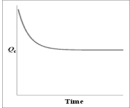
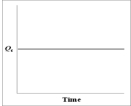
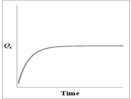
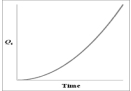
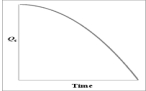
For the equilibrium A2(g) For the equilibrium A<sub>2</sub>(g)    2A(g) ,if a sample of A<sub>2</sub>(g) is placed in a sealed container and allowed to come to equilibrium,which graph best represents the relationship between Q<sub>c</sub> and time as equilibrium is established? A)    B)    C)    D)    E)   2A(g) ,if a sample of A2(g) is placed in a sealed container and allowed to come to equilibrium,which graph best represents the relationship between Qc and time as equilibrium is established?


A) For the equilibrium A<sub>2</sub>(g)    2A(g) ,if a sample of A<sub>2</sub>(g) is placed in a sealed container and allowed to come to equilibrium,which graph best represents the relationship between Q<sub>c</sub> and time as equilibrium is established? A)    B)    C)    D)    E)
B) For the equilibrium A<sub>2</sub>(g)    2A(g) ,if a sample of A<sub>2</sub>(g) is placed in a sealed container and allowed to come to equilibrium,which graph best represents the relationship between Q<sub>c</sub> and time as equilibrium is established? A)    B)    C)    D)    E)
C) For the equilibrium A<sub>2</sub>(g)    2A(g) ,if a sample of A<sub>2</sub>(g) is placed in a sealed container and allowed to come to equilibrium,which graph best represents the relationship between Q<sub>c</sub> and time as equilibrium is established? A)    B)    C)    D)    E)
D) For the equilibrium A<sub>2</sub>(g)    2A(g) ,if a sample of A<sub>2</sub>(g) is placed in a sealed container and allowed to come to equilibrium,which graph best represents the relationship between Q<sub>c</sub> and time as equilibrium is established? A)    B)    C)    D)    E)
E) For the equilibrium A<sub>2</sub>(g)    2A(g) ,if a sample of A<sub>2</sub>(g) is placed in a sealed container and allowed to come to equilibrium,which graph best represents the relationship between Q<sub>c</sub> and time as equilibrium is established? A)    B)    C)    D)    E)

F) B) and C)
G) B) and E)

Correct Answer

verifed

verified

Which is the correct equilibrium constant expression for the following reaction? FeO(s) + H2(g) Which is the correct equilibrium constant expression for the following reaction? FeO(s) + H<sub>2</sub>(g)    Fe(s) + H<sub>2</sub>O(g)  A) K<sub>c</sub> = [H<sub>2</sub>O]/[H<sub>2</sub>] B) K<sub>c</sub> = [Fe] [H<sub>2</sub>O]/[Fe<sub>2</sub>O<sub>3</sub>] C) K<sub>c</sub> = [Fe<sub>2</sub>O<sub>3</sub>] [H<sub>2</sub>]/[Fe][H<sub>2</sub>O] D) K<sub>c</sub> = [Fe][H<sub>2</sub>O]/[Fe<sub>2</sub>O<sub>3</sub>] [H<sub>2</sub>] E) K<sub>c</sub> = [H<sub>2</sub>]/[H<sub>2</sub>O] Fe(s) + H2O(g)


A) Kc = [H2O]/[H2]
B) Kc = [Fe] [H2O]/[Fe2O3]
C) Kc = [Fe2O3] [H2]/[Fe][H2O]
D) Kc = [Fe][H2O]/[Fe2O3] [H2]
E) Kc = [H2]/[H2O]

F) A) and B)
G) All of the above

Correct Answer

verifed

verified

The standard free energy of formation of gaseous hydrogen iodide is 1.30 kJ/mol at 25°C.What is KP for the reaction H2(g) + I2(g) The standard free energy of formation of gaseous hydrogen iodide is 1.30 kJ/mol at 25°C.What is K<sub>P</sub> for the reaction H<sub>2</sub>(g) + I<sub>2</sub>(g)    2HI(g) at this temperature? A) 0.35 B) 0.59 C) 1.0 D) 1.7 E) 2.9 2HI(g) at this temperature?


A) 0.35
B) 0.59
C) 1.0
D) 1.7
E) 2.9

F) B) and D)
G) None of the above

Correct Answer

verifed

verified

The equilibrium constant for the reaction AgBr(s) The equilibrium constant for the reaction AgBr(s)    Ag<sup>+</sup>(aq) + Br<sup>-</sup> (aq) is the solubility product constant,K<sub>sp</sub> = 7.7 × 10<sup>-13</sup> at 25°C.Calculate ΔG for the reaction when [Ag<sup>+</sup>] = 1.0 × 10<sup>-2</sup> M and [Br<sup>-</sup>] = 1.0 × 10<sup>-3</sup> M.Is the reaction spontaneous or nonspontaneous at these concentrations? (R = 8.314 J/K • mol)  A) ΔG = 69.1 kJ/mol,nonspontaneous B) ΔG = -69.1 kJ/mol,spontaneous C) ΔG = 97.5 kJ/mol,spontaneous D) ΔG = 40.6 kJ/mol,nonspontaneous E) ΔG = -97.5 kJ/mol,nonspontaneous Ag+(aq) + Br- (aq) is the solubility product constant,Ksp = 7.7 × 10⁻¹³ at 25°C.Calculate ΔG for the reaction when [Ag+] = 1.0 × 10⁻² M and [Br-] = 1.0 × 10⁻³ M.Is the reaction spontaneous or nonspontaneous at these concentrations? (R = 8.314 J/K • mol)


A) ΔG = 69.1 kJ/mol,nonspontaneous
B) ΔG = -69.1 kJ/mol,spontaneous
C) ΔG = 97.5 kJ/mol,spontaneous
D) ΔG = 40.6 kJ/mol,nonspontaneous
E) ΔG = -97.5 kJ/mol,nonspontaneous

F) A) and D)
G) A) and C)

Correct Answer

verifed

verified

A temperature increase favors an endothermic reaction.

A) True
B) False

Correct Answer

verifed

verified

Consider the reaction N2(g) + O2(g) Consider the reaction N<sub>2</sub>(g) + O<sub>2</sub>(g)    2NO(g) ,for which K<sub>c</sub> = 0.10 at 2000ºC.Starting with initial concentrations of 0.040 M for N<sub>2</sub> and 0.040 M for O<sub>2</sub> ,what is the equilibrium concentration of NO? A) 0.0096 M B) 0.011 M C) 0.019 M D) 0.080 M E) 0.10 M 2NO(g) ,for which Kc = 0.10 at 2000ºC.Starting with initial concentrations of 0.040 M for N2 and 0.040 M for O2 ,what is the equilibrium concentration of NO?


A) 0.0096 M
B) 0.011 M
C) 0.019 M
D) 0.080 M
E) 0.10 M

F) None of the above
G) All of the above

Correct Answer

verifed

verified

When the reaction 2H2S(g) When the reaction 2H<sub>2</sub>S(g)    2H<sub>2</sub>(g) + S<sub>2</sub>(g) is carried out at 1065°C,K<sub>P</sub> = 0.012.Starting with pure H<sub>2</sub>S at 1065°C,what must the initial pressure of H<sub>2</sub>S be if the equilibrated mixture at this temperature is to contain 0.250 atm of H<sub>2</sub>(g) ? A) 1.06 atm B) 1.86 atm C) 0.94 atm D) 0.90 atm E) 1.52 atm 2H2(g) + S2(g) is carried out at 1065°C,KP = 0.012.Starting with pure H2S at 1065°C,what must the initial pressure of H2S be if the equilibrated mixture at this temperature is to contain 0.250 atm of H2(g) ?


A) 1.06 atm
B) 1.86 atm
C) 0.94 atm
D) 0.90 atm
E) 1.52 atm

F) All of the above
G) A) and E)

Correct Answer

verifed

verified

The solubility product constant,Ksp,at 25°C for AgI(s) in water has the value 8.3 × 10⁻¹⁷. Calculate ΔG at 25°C for the process AgI(s) The solubility product constant,K<sub>sp</sub>,at 25°C for AgI(s) in water has the value 8.3 × 10<sup>-17</sup>. Calculate ΔG at 25°C for the process AgI(s)    Ag<sup>+</sup>(aq) + I<sup>-</sup>(aq) where [Ag<sup>+</sup>] = 9.1 × 10<sup>-9</sup> M and [I<sup>-</sup>] = 9.1 × 10<sup>-9</sup> M.(R = 8.314 J/K • mol)  A) +4.4 kJ/mol B) +91.7 kJ/mol C) 0.0 kJ/mol D) -91.7 kJ/mol E) -4.4 kJ/mol Ag+(aq) + I-(aq) where [Ag+] = 9.1 × 10⁻⁹ M and [I-] = 9.1 × 10⁻⁹ M.(R = 8.314 J/K • mol)


A) +4.4 kJ/mol
B) +91.7 kJ/mol
C) 0.0 kJ/mol
D) -91.7 kJ/mol
E) -4.4 kJ/mol

F) A) and D)
G) C) and E)

Correct Answer

verifed

verified

For the following reaction at equilibrium,which choice gives a change that will shift the position of equilibrium to favor formation of more products? 2NOBr(g) For the following reaction at equilibrium,which choice gives a change that will shift the position of equilibrium to favor formation of more products? 2NOBr(g)    2NO(g) + Br<sub>2</sub>(g) ,ΔHº<sub>rxn</sub> = 30 kJ/mol A) Increase the total pressure by decreasing the volume B) Add more NO C) Remove Br<sub>2</sub> D) Lower the temperature E) Remove NOBr selectively 2NO(g) + Br2(g) ,ΔHºrxn = 30 kJ/mol


A) Increase the total pressure by decreasing the volume
B) Add more NO
C) Remove Br2
D) Lower the temperature
E) Remove NOBr selectively

F) B) and E)
G) A) and E)

Correct Answer

verifed

verified

Suppose 50.0 g of N2O4 is introduced into an evacuated 2.00-L vessel and allowed to come to equilibrium with its decomposition product,N2O4(g) Suppose 50.0 g of N<sub>2</sub>O<sub>4</sub> is introduced into an evacuated 2.00-L vessel and allowed to come to equilibrium with its decomposition product,N<sub>2</sub>O<sub>4</sub>(g)    2NO<sub>2</sub>(g) .For this reaction K<sub>c</sub> = 0.133.Once the system has reached equilibrium,5.00 g of NO<sub>2</sub> is injected into the vessel,and the system is allowed to equilibrate once again.What is the mass of N2O4 in the final equilibrium mixture? A) 39.5 g B) 35.3 g C) 30.3 g D) 25.2 g E) 43.7 g 2NO2(g) .For this reaction Kc = 0.133.Once the system has reached equilibrium,5.00 g of NO2 is injected into the vessel,and the system is allowed to equilibrate once again.What is the mass of N2O4 in the final equilibrium mixture?


A) 39.5 g
B) 35.3 g
C) 30.3 g
D) 25.2 g
E) 43.7 g

F) C) and D)
G) C) and E)

Correct Answer

verifed

verified

At 450°C,tert-butyl alcohol decomposes into water and isobutene. (CH3) 3COH(g) At 450°C,tert-butyl alcohol decomposes into water and isobutene. (CH<sub>3</sub>) 3COH(g)    (CH<sub>3</sub>) <sub>2</sub>CCH<sub>2</sub>(g) + H<sub>2</sub>O(g)  A reaction vessel contains these compounds at equilibrium.What will happen if the volume of the container is reduced by 50% at constant temperature? A) The forward reaction will proceed in order to reestablish equilibrium. B) The reverse reaction will proceed in order to reestablish equilibrium. C) No change occurs. D) The equilibrium constant will increase. E) The equilibrium constant will decrease. (CH3) 2CCH2(g) + H2O(g) A reaction vessel contains these compounds at equilibrium.What will happen if the volume of the container is reduced by 50% at constant temperature?


A) The forward reaction will proceed in order to reestablish equilibrium.
B) The reverse reaction will proceed in order to reestablish equilibrium.
C) No change occurs.
D) The equilibrium constant will increase.
E) The equilibrium constant will decrease.

F) B) and C)
G) C) and D)

Correct Answer

verifed

verified

Suppose 25.0 g of HI(g) is injected into a 4.00-L reaction vessel that contains 20.0 g of I2(g) . When the system comes to equilibrium at 400.ºC,what will be the total pressure inside the reaction vessel? (R = 0.08206 L • atm/K • mol) 2HI(g) Suppose 25.0 g of HI(g) is injected into a 4.00-L reaction vessel that contains 20.0 g of I<sub>2</sub>(g) . When the system comes to equilibrium at 400.ºC,what will be the total pressure inside the reaction vessel? (R = 0.08206 L • atm/K • mol)  2HI(g)    H<sub>2</sub>(g) + I<sub>2</sub>(g) ,K<sub>c</sub> = 0.0156 at 400.ºC A) 2.70 atm B) 13.0 atm C) 2.43 atm D) 0.815 atm E) 3.79 atm H2(g) + I2(g) ,Kc = 0.0156 at 400.ºC


A) 2.70 atm
B) 13.0 atm
C) 2.43 atm
D) 0.815 atm
E) 3.79 atm

F) A) and B)
G) A) and E)

Correct Answer

verifed

verified

At equilibrium,the rate of the forward reaction is equal to the rate of the reverse reaction.

A) True
B) False

Correct Answer

verifed

verified

Find the temperature at which KP = 42.0 for the reaction H2(g) + I2(g) Find the temperature at which K<sub>P</sub> = 42.0 for the reaction H<sub>2</sub>(g) + I<sub>2</sub>(g)    2HI(g) . [Given: at 25°C,for H<sub>2</sub>(g) ,ΔH°<sub>f</sub> = 0,S° = 131.0 J/mol • K; for I<sub>2</sub>(g) ,ΔH°<sub>f</sub> = 62.26 kJ/mol,S° =260.6 J/mol • K; for HI(g) ,ΔH°<sub>f</sub> = 25.9 kJ/mol,S° = 206.3 J/mol • K; assume that ΔH° and ΔS° Are independent of temperature.] A) 1040 K B) 168 K C) 539 K D) 1400 K E) 34,200 K 2HI(g) . [Given: at 25°C,for H2(g) ,ΔH°f = 0,S° = 131.0 J/mol • K; for I2(g) ,ΔH°f = 62.26 kJ/mol,S° =260.6 J/mol • K; for HI(g) ,ΔH°f = 25.9 kJ/mol,S° = 206.3 J/mol • K; assume that ΔH° and ΔS° Are independent of temperature.]


A) 1040 K
B) 168 K
C) 539 K
D) 1400 K
E) 34,200 K

F) A) and B)
G) C) and E)

Correct Answer

verifed

verified

Showing 101 - 120 of 135

Related Exams

Show Answer